The next garage door opener you buy may stop operating when its backup battery gets too weak to complete a safe opening and closing cycle. A Consumer Product Safety Commission rule published October 30, 2026 updates the federal safety standard to address that situation. It does not require you to replace your existing opener.
The direct final rule is scheduled to take effect December 29, 2026. Significant adverse comments submitted by November 30 could lead CPSC to withdraw it.
What changes for battery backups
The rule incorporates the September 15, 2025 edition of UL 325, the industry standard used by the federal rule. It covers residential openers serving buildings of one to four homes, including battery-powered models and models with backup batteries.
Compliance is checked with a fully charged battery, then with that same battery discharged to the manufacturer's minimum operating voltage. The entrapment protection still has to work at that low charge level.
The revised requirements address whether enough battery energy remains to complete an opening and closing cycle safely. CPSC explains that, when there is too little, the door remains open and the opener is inoperable until the battery recharges or AC power returns.
The update also changes the wording of a check for secondary safety devices. CPSC says the standard still requires a response to faults, such as broken sensor wiring. It does not remove the need for protection against a closing door trapping someone.
If the door is open when the battery runs out
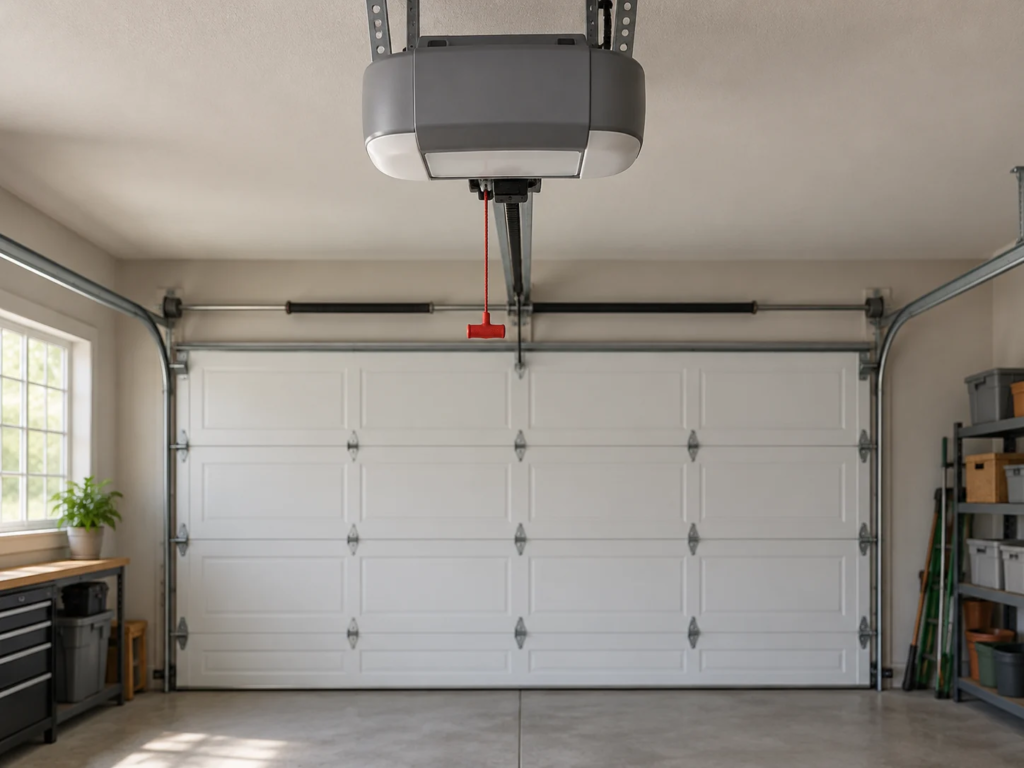
A door that will not close during an outage creates an awkward problem. The emergency release may disconnect the opener, but pulling it while the door is open can be dangerous if springs are weak or broken. The door can fall rapidly.
The federal standard's owner instructions say to use the emergency release with the door closed if possible. Read your model's manual before an outage and follow its procedure. If the door is already open and you are unsure whether it is safe to release, keep people clear and call a qualified garage door technician.
Spring and cable repairs belong with a qualified service person. A door that is heavy, sticks or will not stay balanced needs attention before you rely on moving it by hand.
Check the opener you already own
Find your model's manual and confirm whether it has battery backup. Look up the battery's warning lights, replacement instructions and recommended test. Warning signals differ between models, so a beep alone does not tell you which part has failed.
Follow the manufacturer's procedure for checking backup operation. Keep the moving door in sight and keep people and pets away from its path. A battery that cannot complete the prescribed test needs the troubleshooting or replacement steps in that manual.
Test the reversal system monthly using your opener's instructions. The federal standard calls for the closing door to reverse on contact with a 1½-inch-high object, such as a 2 by 4 laid flat. Stop using the opener and arrange service if it fails the test.
Find the emergency release and read its warning label while the door is closed. Learning the procedure in daylight is easier than figuring it out with a door overhead during a blackout.
Buying a replacement
There is no need to replace a working opener solely because this rule was published. If yours needs replacement, ask the manufacturer which UL 325 edition the model meets and check the manufacture date on the unit and carton.
The change is a reason to pay attention to battery condition. Backup power is useful only while the battery can run the door and its safety systems reliably.