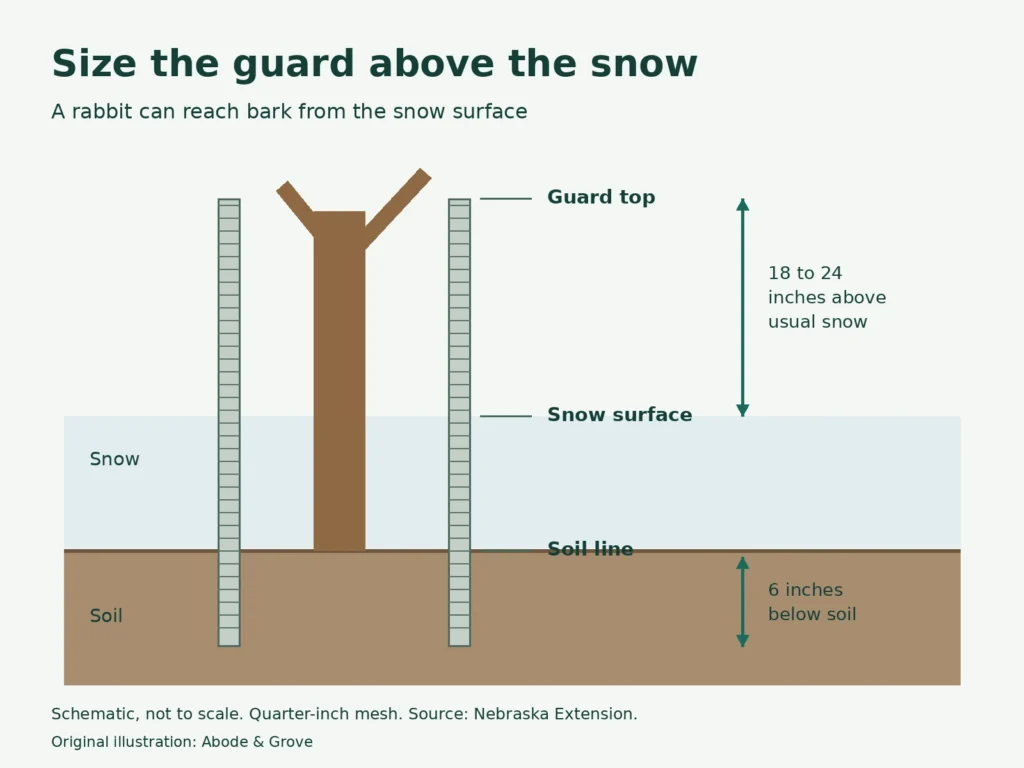
Size tree guards for rabbits from the snow surface, not just the ground. Nebraska Extension recommends a guard that extends 18 to 24 inches above the usual snow depth. A quarter-inch hardware-cloth cylinder can also exclude voles, provided its bottom is buried. Put the protection in place before lasting snow makes the trunk accessible from higher up.
Allow for snow and the buried edge
A guard’s advertised height may include material that ends up underground. Work out the height you need above the soil first, then add the portion you plan to bury.
For example, if snow usually settles 12 inches deep beside a tree, Nebraska’s rabbit clearance calls for 30 to 36 inches of exposed guard. Following its separate six-inch burial recommendation would require 36 to 42 inches of material in total. The example assumes that snow depth and uses the published clearances.
Use the snow depth at the trunk. A drift or a pile from shoveling can give rabbits a higher place to stand. Iowa State Extension advises checking after heavy snow and clearing it away when animals could reach over the protection.
The extension recommendations differ
Iowa State recommends rabbit fencing 24 to 36 inches tall, with enough height remaining after heavy snowfall. For vole exclusion, it specifies burying hardware cloth two to three inches. The University of Vermont recommends protecting at least two feet of trunk, higher where snow is deep, and setting mesh four to six inches into the ground where possible.
Nebraska’s snow-based rule is useful when a fixed-height guard would disappear into a deep drift. Its burial recommendation is deeper than Iowa State’s. Choose a guard for your yard’s snow conditions. A two-foot roll will not provide enough exposed height everywhere.
Choose mesh for the animals you need to exclude
Quarter-inch hardware cloth is the option all three extension services name for voles. Iowa State also accepts chicken wire for rabbits, but its vole advice uses the smaller mesh. If both animals are a concern, hardware cloth avoids relying on rabbit fencing to do a different job.
Vermont recommends making the cylinder wide enough for five years of growth and protecting the trunk up to its first branches. Check the clearance as the trunk grows.
Iowa State’s U-shaped anchor pins secure rabbit fencing against crawling underneath. They do not replace the buried edge specified for tunneling voles. A surface-pinned guard leaves a route for a tunneling vole.
Remove the cover around the trunk
Voles work under tall grass, snow and mulch. Nebraska recommends mowing and trimming around trees and removing brush piles or other hiding places. Pull mulch away from the bark. Iowa State specifies at least six inches of clearance for wood mulch.
Before using fall leaves as winter mulch in beds, protect trunks and stems that the mulch will surround. Vermont also recommends a vegetation-free area extending at least two feet from an apple tree’s trunk to discourage voles.
Iowa State notes that winter conditions reduce their usefulness and that heavy rain or snow means reapplication. Nebraska warns that hungry animals may feed despite an unpleasant taste. Physical protection is the better starting point for the young tree covered here.
Deer browsing needs different protection
A short trunk guard leaves foliage and branches accessible to deer. Iowa State recommends barriers around individual plants at least six feet tall, with shorter enclosed-top cylinders possible. Its advice for fencing a large area is taller still, so a tree-cylinder specification should not be used as a perimeter-fence height.
For antler rubbing, Nebraska describes slit PVC pipe or white drain tile fitted around the trunk up to the lowest branch as protection against rubbing, as well as rabbits and voles. That does not make the same pipe a barrier against deer eating branches.
Check damaged bark and spring growth
Bark removed all the way around the trunk is girdling. Iowa State says growth above the injury eventually dies and that replacing a severely girdled tree is usually the practical choice for a home gardener. Partial damage can recover when enough bark remains. Wound dressings and paints do not repair it.
Once snow cover and winter feeding risk have passed, remove seasonal rabbit fencing and guards. Iowa State gives April as typical for its region. Remove plastic spiral wraps in spring because they can harbor summer pests. Vermont allows a roomy hardware-cloth cylinder to stay year-round, but check its clearance as the tree grows.