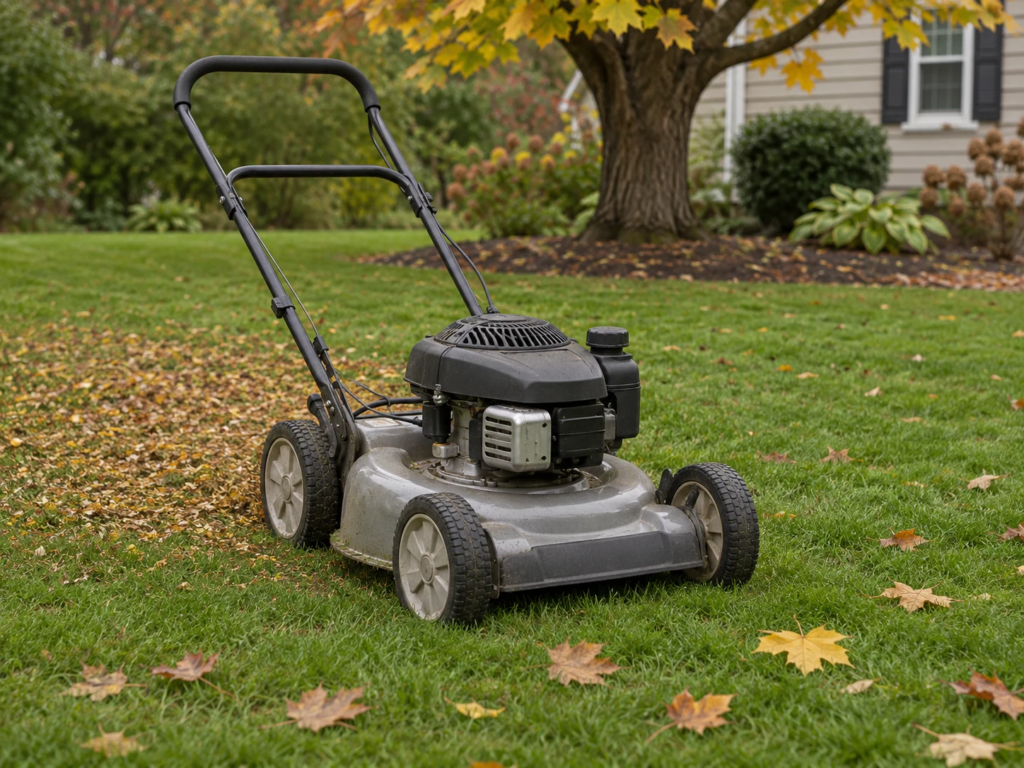
A mower can chop fallen deciduous leaves into a lawn, provided the fragments settle through the grass instead of leaving a thick mat. University trials support that approach under the conditions tested. Michigan State describes handling up to about 6 inches with a suitable mulching mower, but the mower’s capacity and the condition of the leaves matter. Pine needles are better moved to planting beds.
Results from university lawn trials
Virginia Cooperative Extension's 2025 leaf guide describes the Purdue trial. A perennial ryegrass lawn took that whole load of maple leaves in one application. The chopped leaves didn't hurt its quality, color, growth, thatch, soil pH, weeds or disease levels.
They didn't replace nitrogen fertilizer, though, so keep any fall feeding you already do.
A three-year New York study published in 2024 found better turf quality and soil health with mulching than with leaf removal. Mulching on site also used less fuel overall than community leaf pickup.
Michigan State's turf specialists started testing this after yard-waste bans in the 1990s. Over time, the leaf mulch cut dandelions and crabgrass too, because it filled the bare spots where weed seeds sprout.
In some areas it's illegal to put bagged leaves at the curb, because of limits on lawn waste in landfills.
Mulching is a useful first option when the mower can chop the layer finely enough. Rake off excess leaves when clumps remain or the grass is buried, rather than treating trial results as permission to leave any depth of leaves in place.
How deep a layer your mower can take
The 6-inch limit comes from Michigan State Extension, and it's for a mulching mower in one pass. A regular mower may take several trips. Virginia Tech repeats the figure and adds that it depends on the size and power of your mower.
Almost any rotary mower can mulch leaves, Virginia Tech says, though mulching mowers do it better because their decks and blades are built to chop clippings fine.
Treat that depth as an upper limit for a suitable mower. At peak leaf drop, MSU suggests mowing as often as twice a week. Smaller batches are easier to chop than a pile left to build up.
Bits of leaf stay on the surface for a few days before they sift down into the grass, and by spring you won't see them.
Mower settings and safety
Raise the deck to its highest setting and cross the leaves once or twice, as MSU advises. Slightly damp leaves work best. Moist leaves raise less dust, but soaking-wet ones strain the engine and don't chop into pieces small enough to break down.
Walk the lawn first and pick up sticks and limbs, because a mower throws debris. Virginia Tech also recommends safety goggles and a dust mask.
If you mulch every week through the fall, keep the blade sharp and the air and fuel filters clean. Both the chopping and the engine's life improve.
Deep piles and pine needles
Leaving leaves where they fall isn't the same as mulching them. A thick, unchopped layer blocks sunlight and holds moisture in the grass, which raises the risk of turf disease. If the layer is deeper than your mower can take, rake some of it off before you mow.
Pine needles resist breakdown and stay intact for months even after chopping, so they don't belong in the lawn. Virginia Tech suggests spreading them as mulch around shrubs and in planting beds instead.