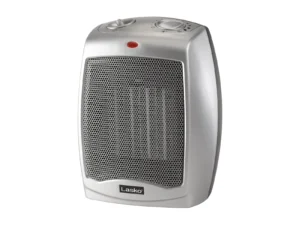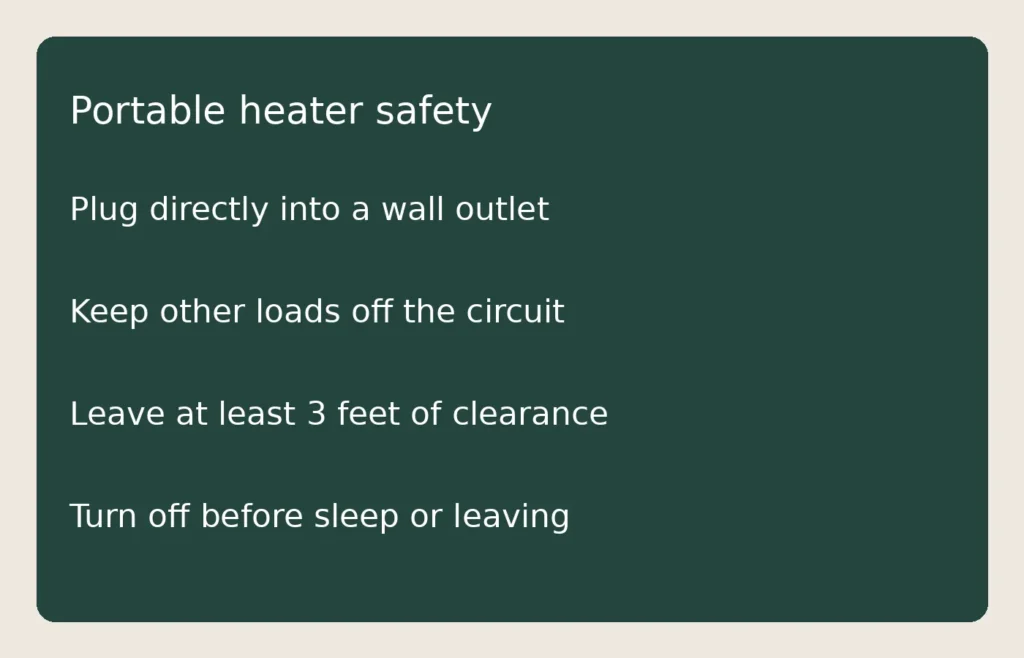
Plug a portable space heater directly into a wall outlet and keep other electrical devices off its circuit. The US Fire Administration advises both precautions. An outlet on the other side of the room may share the same circuit, so moving a plug alone does not establish that the load is separate.
A heater can use most of a circuit’s capacity
At 120 volts, a heater labeled 1,500 watts draws about 12.5 amps. That is watts divided by volts. Use the heater’s own label for its electrical rating. A circuit’s breaker rating is not permission to fill the remaining capacity with another appliance.
If the breaker trips while the heater runs, stop and disconnect the heater. Do not repeatedly reset the breaker to keep using it. Have the heater and circuit checked if you cannot identify a safe arrangement.
Keep the cord direct
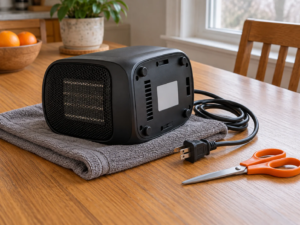
CPSC and the fire agencies advise against extension cords and power strips for portable heaters. If the heater’s cord will not reach a suitable outlet, choose another location. Keep the cord out of foot traffic and follow the heater’s instructions.
The fire administration also recommends a heater tested by a recognized laboratory with automatic shutoff if it tips over. Check the model’s instructions and recalls before the first use of the season.
Leave three feet around it
Keep bedding, curtains, clothing, furniture and other materials that can burn at least three feet from the heater. Stand it on a solid, flat surface where it cannot block a doorway or an escape route.
Look at the room as it will be used. A chair pushed back, a blanket dropped from a bed or a curtain moving in a draft can close a gap that looked clear when you switched the heater on.
Turn it off before leaving or sleeping
Turn the heater off and unplug it when you leave the room or go to bed. A thermostat or timer does not replace that step. CPSC also warns against leaving a heater unattended around infants or people who cannot move away from excessive heat.
Before using an older heater, check its model against CPSC’s recall notices. Our DREO recall coverage explains one recent stop-use notice.