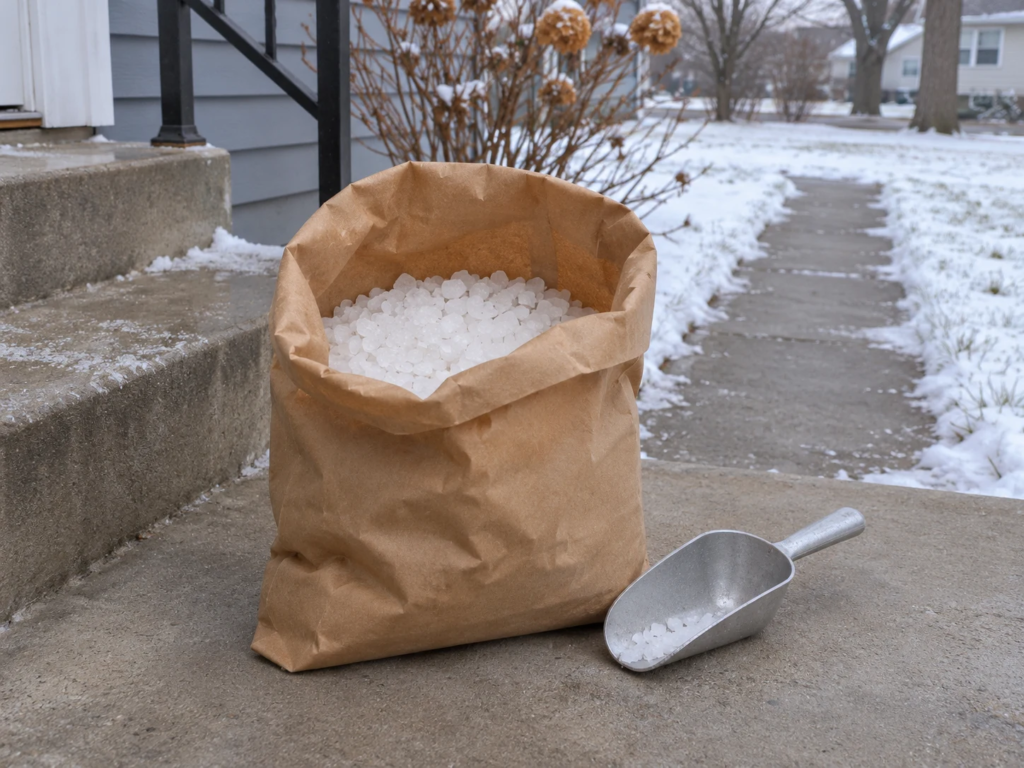
Choose ice melt by pavement temperature, then use only what the cleared surface needs. Ordinary rock salt becomes a poor choice around 15°F and below. Adding more won’t solve that temperature limit, and the excess can wash into plants and waterways.
Check the practical melting temperature
The University of Minnesota’s Winter Salt Guide gives these lowest practical pavement temperatures, using a table adapted from the Minnesota Pollution Control Agency:
- Sodium chloride, or rock salt: 15°F.
- Magnesium chloride: −10°F.
- Calcium chloride: −20°F.
- Calcium magnesium acetate, or CMA: 20°F.
These practical guidelines depend on the product and conditions. Blends vary with their ingredients. Read the product’s effective-temperature range and application instructions, and check the pavement temperature, which may differ from the air temperature.
CMA’s figure is warmer than rock salt’s, so it isn’t the answer to a colder surface. Sand can add traction when melting is impractical, but it doesn’t melt ice and can block drainage systems.
No deicer is a free pass for concrete
University of Minnesota Extension warns that excessive deicer use can degrade concrete, asphalt and natural stone and corrode metal. A lower melting temperature does not establish that a product is harmless to your steps.
Check the label against the surface you have before applying it. Shoveling and scraping first reduce how much chemical you need. Use deicer only on the remaining critical icy patches and avoid coating an already clear walk.
Keep runoff away from plants
Extension identifies sodium chloride as particularly damaging to plants. Salt taken up by roots can dehydrate them. Spray can burn foliage, especially evergreens. Sodium also makes clay soil more compact and less able to absorb water.
- Clear snow often, before it becomes a layer of ice.
- Avoid piling salty snow on nearby shrubs.
- Keep new trees and shrubs at least 3 feet from walks and driveways that receive deicer.
- Consider salt-tolerant fine fescue for lawn edges exposed to runoff.
A little salt covers more than a handful of steps
In its smart-salting advice, the Minnesota Pollution Control Agency gives about 12 ounces, roughly a coffee mug, for around 1,000 square feet. It illustrates a light scatter with grains about 3 inches apart. The dose varies by deicer, blend and ice condition. Follow your product’s label.
Once the pavement is dry, sweep up visible extra grains for reuse instead of letting them wash away. More salt left on a dry walk isn’t doing more useful work.